01 / Task
Understand how the market works and where management opportunities lie
The study's objective was to form a holistic picture of the market and transform disparate data into a basis for decision-making. The analysis was intended to demonstrate how the roles of participants are shifting, which models are losing effectiveness, and where opportunities for new positioning, service, and communications are emerging.
market
Moscow and the Moscow region
The analysis covered residential real estate agencies, developers, realtors, aggregators, and online platforms.
Focus
Primary and secondary market
The dynamics of demand, supply, market saturation, the role of mortgages and changes in consumer behavior were examined separately.
Result
Basis for decisions
The research helped test hypotheses, identify players' strengths and weaknesses, and determine which market scenarios should be considered.
02 / What was analyzed
Market structure is changing due to digitalization, the cost of financing, and new housing choice models.
The analysis focuses on the redistribution of roles between agencies, developers, brokers, and platforms, changes in consumer behavior, differences between the primary and secondary markets, and the factors that shape customer trust and choice.
The market is redistributing value between agencies, developers, independent brokers and digital platforms.
Analysis has shown that competitiveness is increasingly determined less by supply volume alone. Key factors include the quality of the client journey, the speed of inquiry processing, the consultant's expertise, access to exclusive properties, and the ability to handle complex transactions.
Format
70
slides: from abstracts and competitor analysis to market development forecasts
Geography
Moscow + Moscow Region
Moscow and the Moscow region were analyzed as related but distinct market contours
Content
TOP
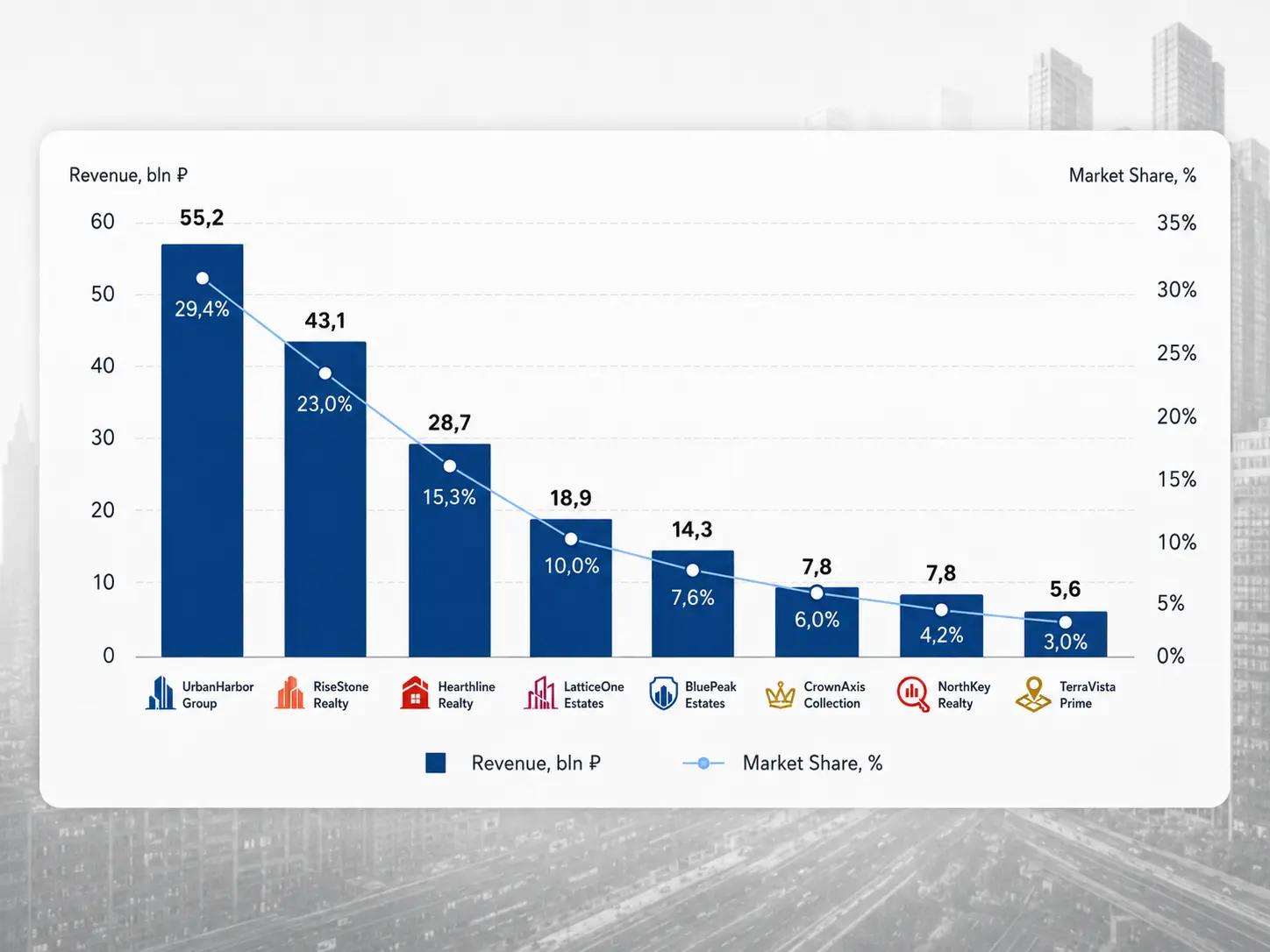
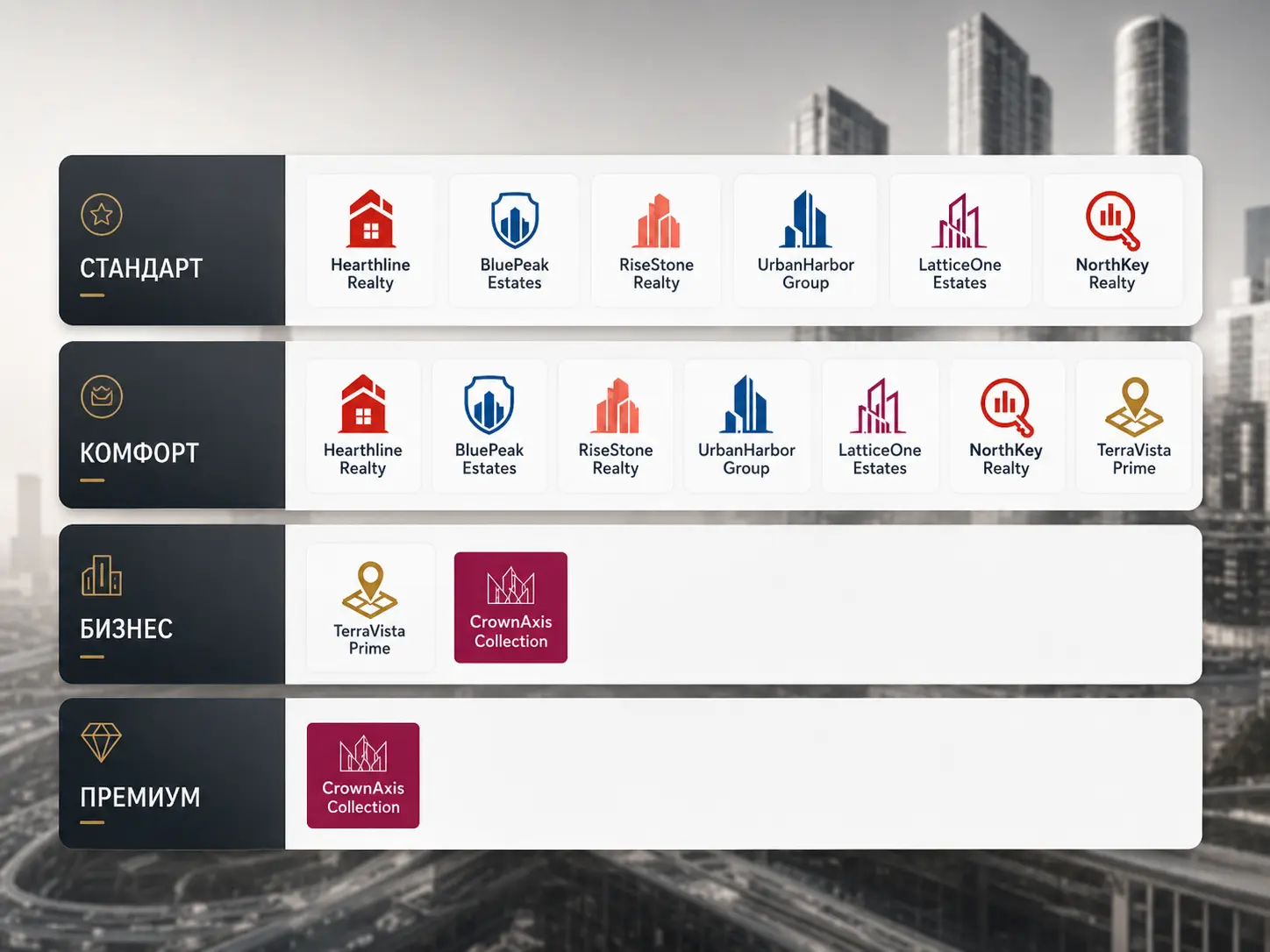
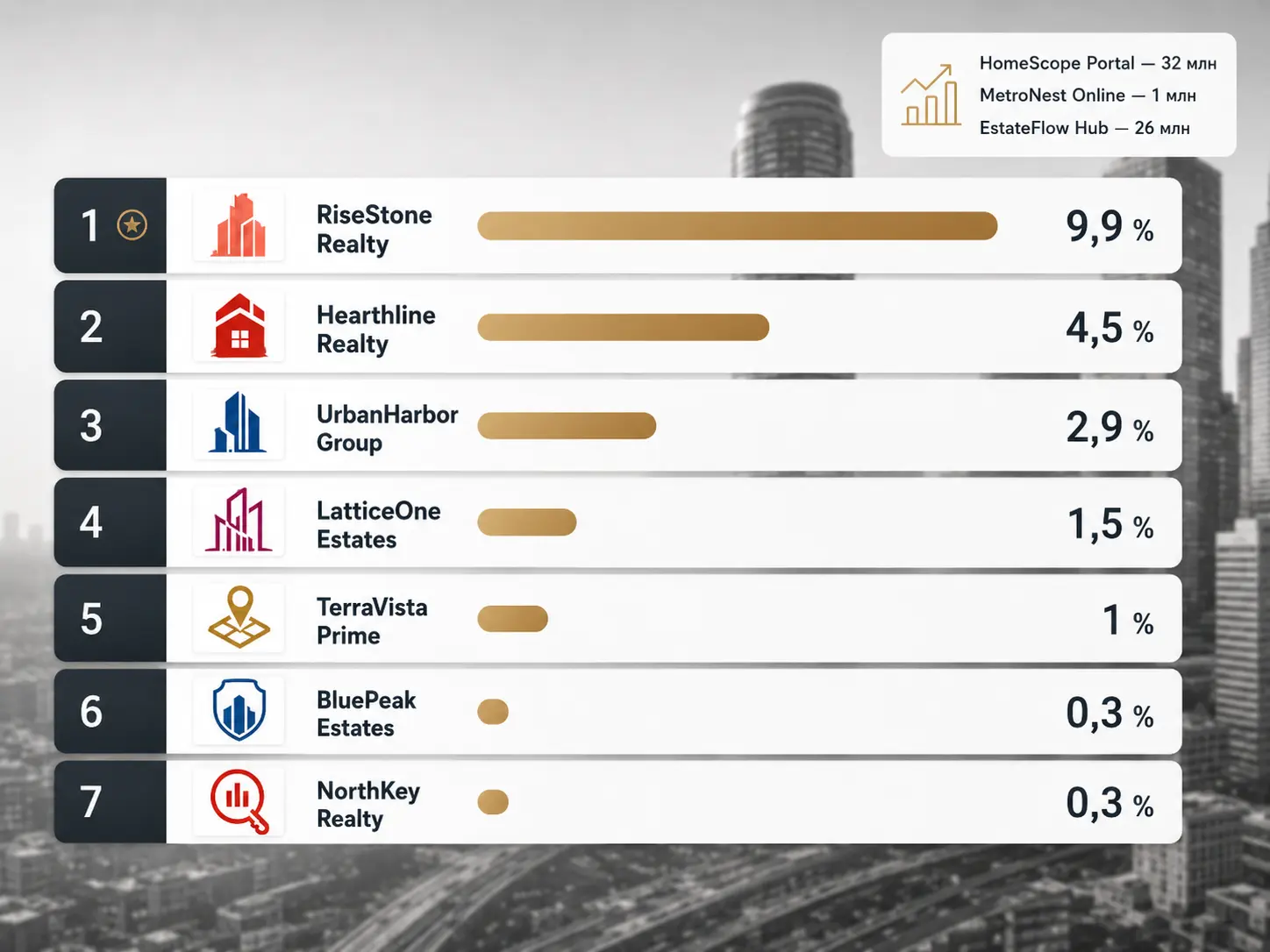
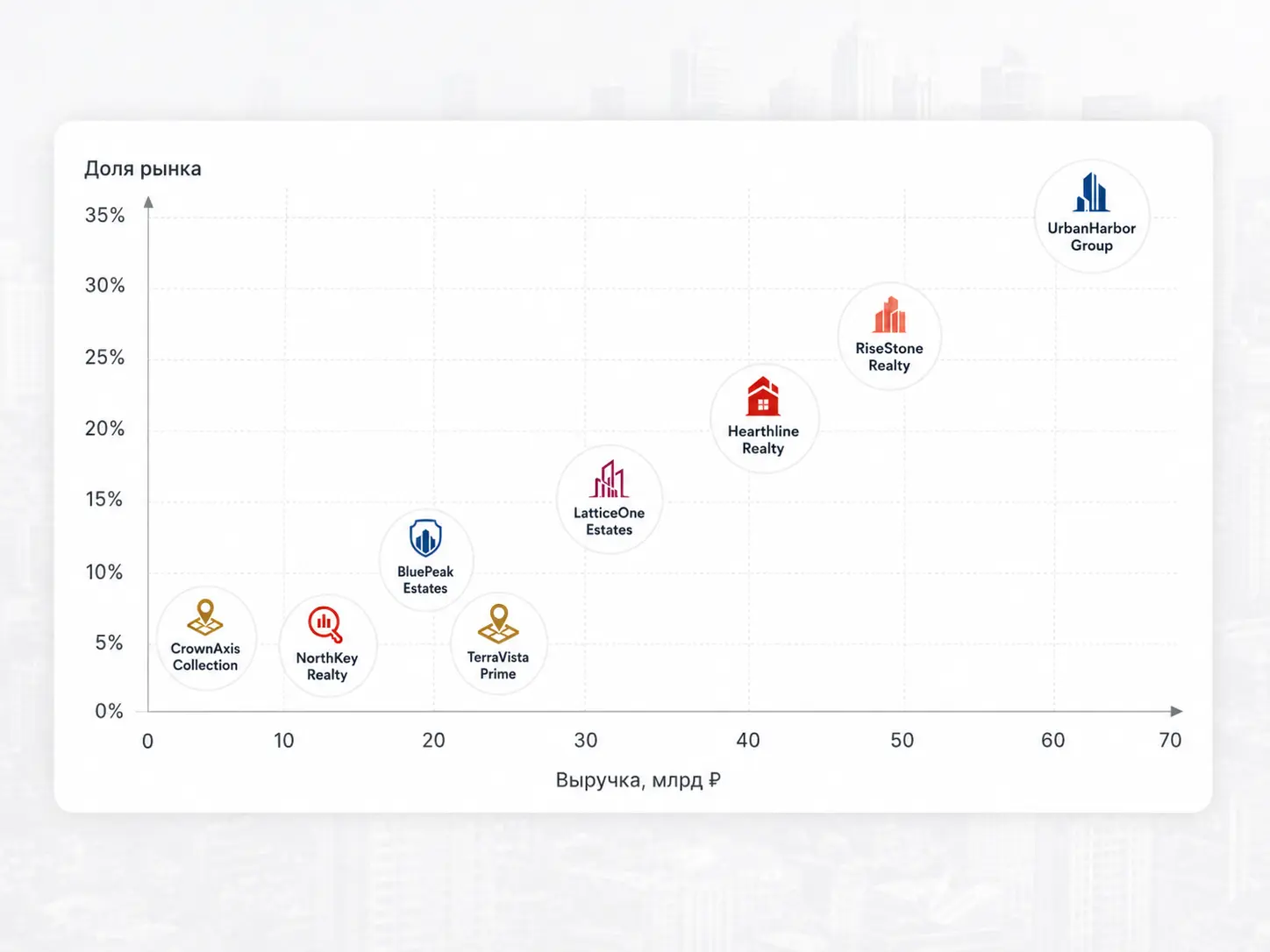
agency ratings, profiles of key players, promotion channels, online platforms and operating models
03 / Methodology
Research stages
First, a database of sources and ratings was compiled. Then, the market was broken down by players, segments, promotion channels, and business models. Following this, theses and hypotheses were formulated, which were tested or refined based on the analysis.
Stage 01
Collection of sources
Ratings, open databases, agency websites, aggregators, industry publications, supply and demand data.
Stage 02
Collection of sources
Ratings, open databases, agency websites, aggregators, industry publications, supply and demand data.
Stage 03
Collection of sources
Ratings, open databases, agency websites, aggregators, industry publications, supply and demand data.
Stage 04
Collection of sources
Ratings, open databases, agency websites, aggregators, industry publications, supply and demand data.
04 / Report fragments
We show the form of work, but do not disclose confidential findings
Analysis has shown that competitiveness is increasingly determined less by supply volume alone. Key factors include the quality of the client journey, the speed of inquiry processing, the consultant's expertise, access to exclusive properties, and the ability to handle complex transactions.
Market research PDF / selected pages
Logic of analysis
We form hypotheses and test them with data
The research doesn't tailor its findings to the original opinion. Its findings are compared to the market, competitors, channels, and consumer behavior.
Safety
In the public version, you can replace the data with diagrams
Numbers, shares, and recommendations can be hidden, blurred, or shown through summary visualizations.
05 / Public version
What conclusions does market analysis draw?
The materials reveal the logic of the market at the level of key trends: how demand is changing, which models are gaining ground, where competition is intensifying, and what requirements are being formed for products, services, and promotion.
We show
Research architecture
how the problem is decomposed into interconnected blocks: market, competitors, client, channels, business models, risks and scenarios
We show
Logic of proof
How sources are verified, what criteria are used to compare players, and how observations are turned into verified conclusions
We do not disclose
Sensitive specifics
Individual company assessments, precise indicators, commercial scenarios and solutions developed for the customer's internal context are not published.
The study provided a comprehensive picture of the competitive landscape and demonstrated the changes in demand, sales channels, and customer behavior that will shape market development. Specific calculations and recommendations are included in a closed version of the project.
Ready to grow?
Let's discuss the budget, timeframe, and what really works here and now.
Leave a request - I will review the task and suggest a work format